Lockdown Defense in Doodle Basketball
Contest threes, cut off dunk lanes, and help teammates without gambling every possession away.
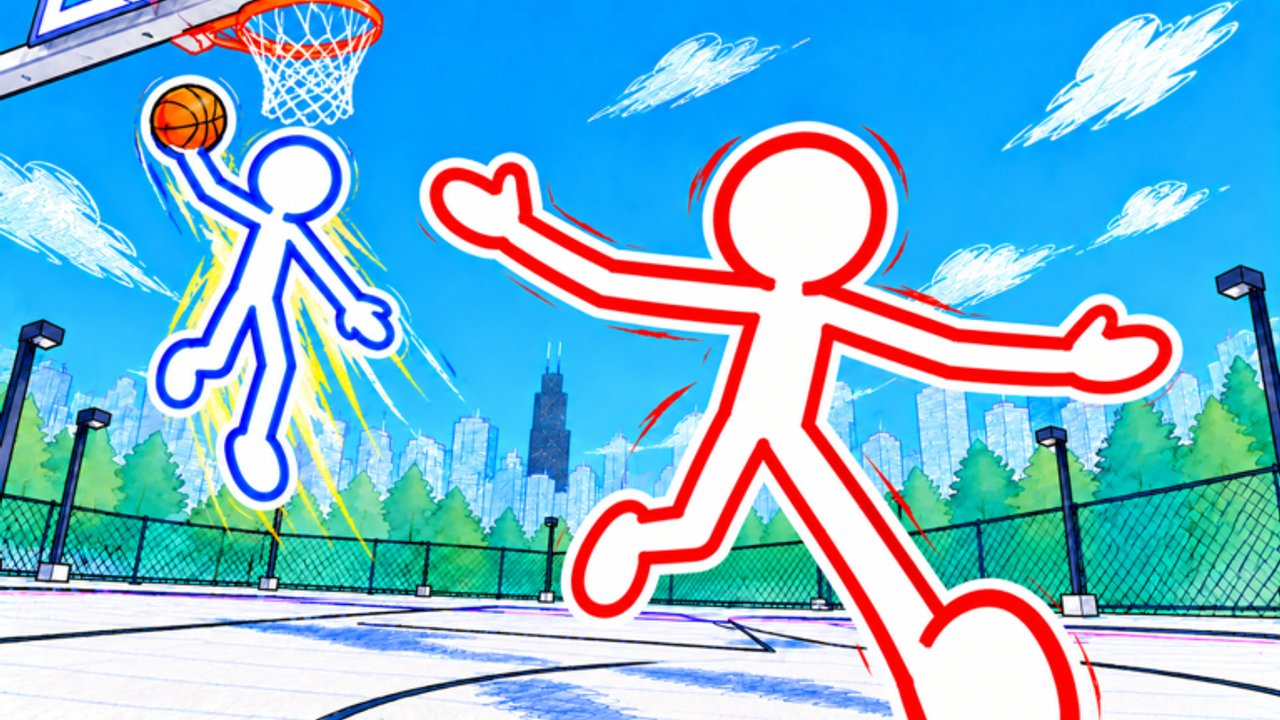
Defense decides close Doodle Basketball sets as often as highlight offense. On notebook courts in doodle city, stick figures who can stay in front, contest on time, and recover after help rotations force tough shots—and that wins 1v1 grinders and chaotic 3v3 lobbies alike. This guide covers lockdown positioning, contest timing, help defense in 2v2 and 3v3, steal discipline, and recovery habits after you get beaten. Pair it with Controls for movement and right-click physical interacts, the Tier List for lockdown-minded playstyles, and Game Modes for how rotations change by format.
New players should skim Getting Started so lobby flow is settled, then return here when opponents start cooking you off the dribble. The full tutorial map lives on the Guides Hub.
What lockdown defense actually means
Lockdown is not endless steal spam. It means:
- Body position — you stay between the ball and the rim (or the shooter’s preferred spot) without fouling yourself out of the play with panic lunges.
- Timing — contests arrive as the ball rises, not a full second early or late.
- Discipline — you pick one or two steal attempts per possession, not ten.
- Communication — in team modes, someone calls switch, help, or stay.
Miss those habits and flashy right-clicks become turnovers the other way or wide-open threes behind you. Watch the mid-article video on this page for live footwork; pause on closeout frames and copy angles more than cosmetic flex.
On-ball positioning
Stay low in your camera sense: keep the ball handler in front, shade them toward the sideline or toward help, and avoid getting crossed into the paint on every hesitation. Useful patterns:
- Force weak hand / weak side — if a player always drives baseline right, shade that path early.
- Arm’s length, not chest-to-chest — too tight and ankle breakers punish you; too soft and pull-ups rain.
- Mirror the first two dribbles — most blow-bys happen on the initial burst, not the fifth dribble.
- Reset after screens or collisions — do not keep sprinting the wrong way; turn, find the ball, reattach.
On doodle courts, sketched lines help you know when you are too deep under the rim. If your camera is too low, help rotations feel late; raise it as described in the controls guide.
Contest timing on jumpers and threes
A good contest alters the shot without leaving you in the air for a pump-fake drive. Rules of thumb:
- Close out under control — sprint to the shooter, then chop steps so you can stay down on a fake.
- Hand up on the rise — contest as the gather completes, not while you are still five meters away.
- Do not jump every pump fake — especially against players who just made a three; stay down, then react.
- Late is better than gambling early — a soft late hand still bothers rhythm; an early jump creates a dunk lane.
Right-click physical interacts can disrupt gathers when timed near the ball handler. Spam them from behind and you whiff into a wide-open look. Use physical pressure as a seasoning, not the entire meal.
Help defense in 2v2 and 3v3
Team defense is where most pubs collapse. Help principles:
- Help the helper — if you stunt at a driver, someone else must rotate to your original assignment.
- Show early, recover early — a brief stunt that forces a pass beats a full commit that never returns.
- Protect the rim first in 3v3 — open corners hurt; open dunks hurt more in short possessions.
- Talk — even simple pings or voice: “I got ball,” “switch,” “rotate corner.”
In 2v2, one misplaced help creates an automatic corner three. Prefer stunting and recovering over hard doubles unless you know the ball handler cannot pass under pressure. In 3v3, load the strong side lightly and keep one defender home on the weak-side shooter. Mode spacing detail: Game Modes.
Steal discipline
Steals feel great and tilt chats. They also open drive lanes when you miss. Discipline rules:
- Attempt steals on loose gathers, lazy cross-court passes, and players who stare at the rim while dribbling.
- Avoid steal spam when the opponent is balanced and squared—you will get crossed.
- After a missed steal, sprint back immediately; do not stand still hoping for a second swipe.
- In team modes, announce when you gamble so teammates can cover behind you.
One clean steal per set beats five whiffs that become posters. Review offensive reads on Shooting and How to Dunk so you know what attackers want—and take it away.
Recovery after you get beat
Everyone gets crossed. Recovery separates lockdowns from spectators:
- Turn hips toward the rim, not toward where the ball was.
- Chase with a tight angle; cut off the finish line instead of trailing the exact footprints.
- If a teammate rotated over, peel to the open shooter instead of double-teaming the ball for free.
- Contest the shot or vertical at the rim with verticality timing—do not tackle mid-air into a clear path.
Practice “get beat on purpose” drills with a friend: let them take one step, then recover and contest. Muscle memory for chase-down angles matters as much as first-step speed.
Mode-by-mode defensive focus
1v1. You live or die on shade and contest timing. Mix physical pressure with patience. After two stops, expect desperation threes—close those out under control.
2v2. Decide before tip-off who funnels ball handlers and who protects the corner. Switch on clear screens if both of you can handle either role; otherwise fight over and communicate.
3v3. Rotate as a unit. The lowest IQ play is three players staring at the ball while a corner stick figure waits alone. Assign a weak-side tagger every possession.
Servers can hold about 28 players in the experience overall, so lobbies feel busy even when your match is three-on-three—keep camera discipline so crowd cosmetics do not distract you from the ball.
Practice plan for defense
Between queues, run a short lab:
- Ten closeouts from the paint to the left corner, stopping in a stance without jumping.
- Ten closeouts to the right wing with a hand up on the catch.
- Five “stay down on pump fake” reps against a friend who fakes every time.
- Five help-and-recover reps in a 2v2 custom: stunt at the driver, then sprint to the corner.
- Five chase-down contests after intentionally giving a step of space.
Compare your feet to successful community clips (including the embed on this page). Match angle and balance more than flashy right-click spam.
Cosmetics and defensive readability
High-contrast outfits help teammates find you when rotating. A distinct silhouette makes “who is helping?” obvious in doodle-city chaos. Cosmetics do not increase steal rate; communication and feet do. Loadout tips: Customization.
Connecting defense to the rest of the wiki
Stops create easy offense in transition. After a board or steal, look for the early outlet and a clean three or dunk—see Shooting and How to Dunk. Role ideas for lockdown-minded builds appear on the Tier List. Creators who break down team D show up on Players. After patches that change contest windows or movement friction, re-check Updates and warm up before ranked vibes. Avoid “auto-block” scripts; Scripts explains ban and malware risk if you research executors at all.
Promo cosmetics never require cheats—bookmark Codes for honest status when events land.
Troubleshooting getting scored on
- Blown by every hesitation: you sit too upright or jump fakes; stay in a stance and shade earlier.
- Open corner threes behind you: you help too deep and never recover; stunt shorter.
- Foulish collisions: you right-click spam from bad angles; contest with feet first.
- Works in 1v1, fails in 3v3: fix rotations; assign weak-side responsibility.
- Steals never land: you swipe balanced handlers; wait for loose gathers and bad passes.
Mindset on the defensive end
Stay calm when you get crossed once. Panic gambling creates the next three points against you. Breathe, recover, contest the next shot. Highlight blocks will come when the angle is honest. Earn that angle with positioning, then rise with a hand up.
Return to this page after a week of play. Note which shade directions worked and which modes punished overhelping. Adjust your default funnel side, keep communication hot in squads, and treat every stop as the start of your next possession—not a reason to sleep on the following closeout.
Browse more tutorials from the Guides Hub, mix defense labs with shooting days, and build a two-way stick figure that survives doodle-city lobbies.
Frequently Asked Questions
Quick answers for Doodle Basketball on Roblox.
How do I play better defense in Doodle Basketball?
Stay between the ball and the rim, close out under control, contest on the rise, and recover quickly after help. Steal spam is optional seasoning—not the whole plan.
Should I jump to contest every three?
No. Jumping every pump fake opens dunk lanes. Chop your steps on the closeout, keep a hand high, and leave your feet only when the shot is truly going up.
How does help defense work in 2v2 and 3v3?
Stunt at drivers, then recover to shooters. In 3v3, protect the rim first but always tag the weak-side corner. Communicate switches so two players do not guard the same stick figure.
Are steals worth spamming?
Rarely. Gamble on loose gathers and lazy passes. After a whiff, sprint back immediately or the next play is an open dunk or three.
Which guide should I read with this one?
Pair Defense with Controls for movement and physical interacts, Game Modes for rotation habits, and the Tier List for lockdown-minded playstyles.